Showing posts with label minimum wage. Show all posts

Monday, May 24, 2021

JOE MANCHIN: POWER BROKER OR JUST A PAIN?

Pundits increasingly describe West
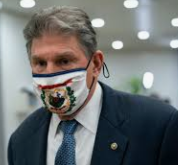
Virginia Senator Joe Manchin as the second most powerful Democrat in the country or as a royal pain. Maybe he’s both. That’s what makes taking a hard look at the 73 - year old third term senator and former governor of the Mountain state worthwhile. Manchin now plays a huge role in every political calculation in Washington and he’s apparently enjoying it.

With Democratic control of the

senate hanging by a thread, Manchin’s made his mark. He blocked President Joe Biden’s nomination of Neera Tanden as budget director and kept the $15.00 minimum
wage out of stimulus legislation. He opposes D.C. statehood, objects to universal background checks on gun purchases, and apparently won’t back eliminating the senate filibuster.

Manchin isn’t on board with the size of Biden’s $2 trillion infrastructure bill. He says he wants a bipartisan infrastructure deal that doesn’t “abandon” Republicans.

So, we ask: what’s up with Manchin. We look at the same facts, but see different things:


Woodson: A Democrat in 

Republican Appearance? 

Understanding Manchin requires understanding West Virginia. The state is 92 percent white, four percent black, 0.997 percent Hispanic, and 0.737 percent Asian. It’s wracked by poverty, addiction, and low household incomes. Richard Ojeda, a West Virginia politician says the choices for high school graduates are, “dig coal, sell dope, or join the Army.”

Until 2005, the West Virginia Senate was 21-13 Democrat. Its House was 72-28 Democrat.  In 2014 West Virginia’s House turned Republican for the first time in 83 years. The state elected its first GOP U.S. Senator in 60 years and sent a totally Republican House to Washington for the first time in 60 years. Donald Trump trounced Hillary Clinton by 42 points in 2016 and Biden by 39 in 2020.

Manchin, nonetheless, has maintained his senate seat since 2012. Until Biden’s election, Manchin was relatively insignificant. Now holding a decisive vote, he has become significant. Conservative votes increase his re-election prospects. He is not beholden to Democrats. They need him more than he needs them. He might be the only Democrat capable of holding that seat.

West Virginian Christopher Reagan, Jr. recently wrote in the Atlantic that “Manchin does not have an overarching ideology.”  True? Perhaps Manchin votes conservatively with political calculation. He voted to confirm more than 100 of Trump’s nominees. None required his vote. He voted for Brett Kavanaugh’s Supreme Court nomination after it became clear Republicans had enough votes for confirmation.

Manchin voted to save Obama Care,saying Medicaid expansion was good for West Virginia. While he made sure top income earners were excluded from Biden’s stimulus package, he voted ‘yes.’  He agrees that if Republicans won’t support an infrastructure package Biden will have to proceed without them.

Will Manchin become a Republican? He’s not fond of GOP leader Mitch McConnell who vowed he’d “crush Manchin like a grape” in the 2018 midterms. After his three-point victory, Manchin delivered a jar of hand crushed grape jelly to McConnell’s office.

Manchin said of Biden in The Hill, “I

think he’s a good human being, just a good heart and a good soul, and he’s the right person at the right time for America.”

Manchin may not be an ideologue. But, he’s a Democrat in a state where Democrats are an endangered species.  


Henry: Mixed Motives?

It seems Manchin has different values

and goals than his fellow Democratic senators. Other Democrats may share some of his ideas, but they don’t act on them with the force and determination he exhibits. Whether his behavior represents political expediency, principle, or the enjoyment of personal political power, he walks a tightrope.   

The turn in his West Virginia constituency away from its Democratic roots likely explains some of his actions. Manchin can win in his state, but he’s not so popular he can deviate far from the views of white West Virginians. If he seeks another term in 2024, he’ll find

himself on the ballot with a strong Republican candidate atop the ticket. His political position offers little margin for error, so the last thing he needs is being on record in support of things the West Virginia electorate would find objectionable.

But home state political considerations

may not totally explain Manchin. Perhaps he believes in what he espouses, even if he’s not an ideologue. Beyond that, Manchin occupies a unique position in the American government. He has some control over the nation’s agenda. That he can use that control in service of his own political survival could mix with principle and the hubris all political figures experience when other people must come to them for things they want. Maybe all of that is going on with Joe Manchin.            


Rob: All About West Virginia

As much as any state, West Virginia symbolizes the changing appeals of America’s two parties. West Virginia

was solidly Democratic when the party’s fundamental appeal was economic populism aimed at white, working class voters. West Virginia has many more coal miners, factory employees, and construction workers than tech types, suburban professionals, and financial industry workers, now the backbone of the Democratic coalition in blue states. Add that to the dearth of voters of color and it’s no wonder West Virginia votes as it does in presidential elections. So, Manchin must represent this constituency while being part of a national party that wants a more progressive nation.  

Culture plays a huge role in this. When the Democratic Party became the party of protecting reproductive freedom, promoting LGBQT rights, and supporting gun safety measures, West Virginia’s white voters fled. Those issues drive the margins Republicans rolled up in recent presidential elections. Manchin knows where the voters are in his state and he’s not risking getting on the wrong side of them, economically or culturally.

Wednesday, April 14, 2021

PAYING FOR INFRASTRUCTURE: THE COMING TAX FIGHT – WHO PAYS?

President Biden’s infrastructure plan comes with a hefty price tag -- about $2 trillion over
eight years. Biden calls it a “once in a lifetime investment in America.” The plan requires new tax revenue. When he rolled it out, the 27-page fact sheet the White House presented listed not just rebuilding roads, bridges, schools, upgrading housing, installing electric charging stations, developing mass transit, and providing redress for usually non-white neighborhoods divided by highways, it also included detailed tax proposals. Biden suggests paying primarily with higher corporate taxes.  


Battle lines formed quickly. Most Congressional Republicans voiced opposition, offering the usual argument that increasing taxes kills jobs. Some Democrats, like West Virginia Senator Joe Manchin, support smaller tax increases than Biden

wants. So, where does that put the president?


Bumping Up Corporate Taxes


So far, Biden has proposed only corporate tax changes, something to which most Americans
don’t object. Many didn’t get much benefit from the 2017 Trump tax cuts which favored corporations and the wealthy. Rolling them back seems popular. One survey showed support for the infrastructure plan increased when pollsters told respondents increasing corporate taxes was part of the plan.  

Trump’s cuts reduced the corporate tax rate from

35% to 21%. Few corporations, especially those with international operations, pay 21%.  Loopholes and incentive provisions allow many companies to whittle

what they actually pay to about eight

per cent. According to the White House, a “recent independent study found that 91 Fortune 500 companies paid $0 in federal corporate taxes in 2018.”  Biden would change that by, among other things:

*Setting the corporate rate at 28%;

*strengthening the Global Minimum Tax for U.S. Multinational Corporations, stopping American companies from claiming tax haven countries as their residence, though they have management and operations in the U.S., a process called “inversion;”

*eliminating intellectual property loopholes that

encourage U.S. companies to locate jobs abroad, a problem the Trump tax bill made worse by giving tax breaks for shifting assets offshore; and

*enacting a minimum tax on “book income,” profits large companies report to shareholders, while avoiding reporting those profits for tax purposes.


The Poor and the Middle Class

Biden apparently does not plan on taxing middle class and poor taxpayers. The poor

have been saddled with a federal minimum wage of $7.25 per hour since 2009, a major factor in America’s income inequality. Since the 1980s the gap between the rich and everyone else has expanded significantly. As Thomas Piketty reported in Capital and

Ideology, between 1960 and 1980, the bottom 50% of earners claimed 20% of national income. Between 1980 and 2015, however, the bottom 50% dropped from 20% to 12%.  Meantime, the top 10% went from a little more than 10% of income earned to more than 20%. The public intuitively understands this, so Biden’s choice not to tax lower income groups to pay for infrastructure should remain popular.    

Public opinion, however, hasn’t translated into GOP support in Congress. Biden keeps talking with Republicans in the hope of peeling off a few of their votes. He still thinks the country needs a bipartisan approach to problems like infrastructure and the funding needed for paying for it. He says he would welcome input from Republicans on specific proposals. If one of them has a better idea, he’d like to hear it.

The GOP response has included tepid support

for a much smaller program. Republicans object to making climate change measures and such things as home care part of the package, saying that’s not really infrastructure. They’d focus only on roads, bridges, and other “traditional” infrastructure items. They contend paring the proposal down, maybe to $600-900 billion, would reduce or eliminate the need for most, if not all, the tax increases. That’s a dubious proposition but, so far, it’s all they’re suggesting.

Republicans likely will accuse Biden of fighting 

a class war on tax issues. We think he should argue it’s past time someone fought for poor and middle class taxpayers (those in the lower 50%) and that corporate America should pay its fair share. Many Americans believe they elected a president who would champion the poor and the middle class. The infrastructure plan offers Biden a good opportunity for proving he’s that president. 

2009 All Over?

To date, Biden’s team has resisted the Republican track, apparently having learned a lesson from the Obama-Biden experience in

2009. That new administration kept making concessions on the size of the recession rescue package, hoping that would garner Republican support.  Cut this or don’t do that, they said, and we might support you. ‘Might’ was the key word. No concessions satisfied Republicans and the plan passed with only Democratic votes.  Some warned the package was too small and
wouldn’t extricate the economy from the ditch it found itself in. Many economists blame the slow growth that followed on the failure of the administration to “Go Big.”  Biden’s people say they won’t make that mistake this time.

Americans, of course, generally don’t like tax increases. Will the current polling showing support for the infrastructure plan and the tax increases hold, especially after the fear campaign the GOP will likely run  when the

real debate begins? Who knows?  We hope Biden, while continuing his dedication to bipartisanship as a governing principle, will remember the lessons of 2009.  This country faces important issues at a perilous moment. Timidity does not seem in order.  


Tuesday, February 2, 2021

FIRST BIG DECISION FOR THE BIDEN ADMINISTRATION: THE CLOCK TICKS


Joe Biden and Kamala Harris took office January 20, assuming the burden of righting the American ship. They have a big job and not long for getting it done.  They’ll have

tough decisions before long. Political reality and history teach that the clock has already started ticking on what they can accomplish.

Presidential terms run four years, but windows of opportunity for passing major legislation close quickly under the weight of pent-up frustrations in a president’s own party, approaching mid-term electionsand opposition candidates revving their engines on runways for the next presidential race. Biden enjoys no exemption from this cruel cycle. Anyone looking hard enough can 

see it looming in the distance.


Biden’s Burden

Biden’s first days have made clear his priorities: (1) get the pandemic under control,(2) fix the related economic problems, (3) address climate change, and (4) attack racial injustice. Biden’s team acknowledges things like infrastructure, tax reform, and rectifying some of former President Donald Trump’s  excesses must wait. That array of priorities creates challenges and opportunities.


Fires rage around the four priorities and many reasons exist for tackling them first.  The country watches carefully. Other than the rabid COVID-19 deniers, most Americans want an end to the death, pain, and personal sacrifice that go with the pandemic.  We can’t imagine anyone being happy with the job losses and business disruption. Many of us have been railing about climate change and racial injustice for years. A strong desire exists for taking on Biden’s targeted issues.

That doesn’t mean his solutions will get unanimous support, or even enough for solid progress. He has offered big, bold proposals for dealing with all four problems. He wants, for example, a $1.9 trillion COVID-19

relief package that includes big stimulus checks, minimum wage increases, significant dollars for cash-strapped state and local governments, and vaccine distribution money.

That’s where the hard choices come. Because Biden’s proposals will draw Republican opposition – even obstruction – he soon must choose between proceeding in the bipartisan way he prefers and taking what he can get with only Democratic support. Thanks to Harris as vice president, he enjoys a one-vote majority in the senate. Speaker Nancy Pelosi presides over a narrow Democratic advantage in the House. Biden has so far refused invitations to set deadlines, but everyone expects a day of reckoning will come. He can keep seeking bipartisan approval or go it alone, knowing he must act quickly or lose his chance. 


The Politics

Right now, Biden’s Democratic support results from a coalition of the willing. Moderate

Democrats cut in the mold of senators like Dick Durban of Illinois and John Hickenlooper, a rookie from Colorado, and progressives like Senator Elizabeth Warren of Massachusetts and New York Representative Alexandria
Ocasio Cortez remain on board. Nobody knows how long Biden (and Harris) can keep this fragile alliance together. He’s avoided a fracture by making cabinet and staff appointments that have something for everybody and issuing executive orders addressing the pent-up frustrations of both sides of his potentially divided house, a house motivated by intense distaste for Trump. With Trump gone, how long this glue sticks remains an open question.   

Across the aisle, some Republicans see the virtue in working with Biden. How many isn’t clear. It’s likely a small number in either house of Congress. Assuming the filibuster rule remains, if it’s ten in the Senate, Biden could get 60 votes and potentially pass broad legislation, like he’s proposed on COVID-19. If it’s one or two, or zero, he’s probably reduced to a stand-alone vaccine distribution bill many Republicans would vote for or something he could pass under budget reconciliation that only requires 51 votes. It’s hard to imagine what such bills would look like, but they won’t have the big, bold provisions Biden wants.

Many Republicans will say they oppose Biden’s bills – especially the COVID-19 relief package -- because of cost. Ordinarily they’d have a point, but under the current unique circumstances, their argument holds much less weight. With interest rates as low as they are, the government can borrow for a big relief package for next to nothing. Given how much the pandemic costs in health care expenses, lost tax revenue, and infrastructure expenditures incurred in fighting the disease, arguably the nation can’t afford not enacting a big package.  


A Little History

Biden should keep in mind Barack Obama’s

2009-10 experience with the Affordable Care Act. Obama believed he could get Republican support if he scaled back the bill by (1) leaving out a public option and (2) modeling the program after what Mitt Romney implemented in Massachusetts. Democrats screamed, but Obama held firm. GOP votes  never came and Obama, having lost his 60-seat senate majority with the
death of Ted Kennedy and the surprise victory of Scott Brown in a Massachusetts special election, settled for no public option and passing the bill under 

the reconciliation 

procedure.


Biden was there, of course, as vice president, so he’s  aware of the dilemma he’ll soon face. The fact the country wants COVID relief as 

badly as it does arguably gives him cover. If he can make real progress on ending the pandemic, many people outside Washington won’t care what he asked Congress for and did or didn’t get. He can declare victory and take on the next problem with good will stored away.

Biden doesn’t have forever. Republicans have started showing their hand, complaining about the size and scope of many of his proposals and asking why he hasn’t  consulted

more with them. Nearly everyone wants bipartisan solutions to the nation’s problems -- except those who don’t and, unfortunately, some of them serve in Congress.   


Monday, April 29, 2019

INCOME INEQUALITY: SOME BASICS


We recently began discussing income inequality in America. We focused our first post on poverty
and who bears the most significant responsibility for attacking the problem of people in our society who don’t have enough for a respectable existence free of want. More recently, we identified and fleshed out barriers to freedom from poverty and income inequality. 

We look now at some of the policy reasons for the divide between those at the top and the rest of the population. A real gap exists between the wealthiest Americans and even the middle class, a circumstance producing anxiety and political instability that feeds our destructive partisan divide. In time, we’ll consider solutions and evaluate proposals offered by the 2020 presidential candidates and others. We think it important we help voters separate real, viable solutions from noise and platitudes.

The Depth of the Problem
We hear much about the “one percent” and how they’ve done better than everyone else.  The numbers tell a disturbing
story of a growing wealth gap in the United States. According to a report by scholars associated with the Roosevelt Institute, since 1980, the share of national income earned by the top 1% doubled, to 20% in 2014, up from 10%. That hasn’t happened in all western democracies. In Denmark, for example, the 1%’s share went up only from 5% to 6%. 

Governmental policies and actions affecting both the top and bottom parts of the economy contribute. At the top, reductions in tax rates gave the wealthy a windfall.  At the bottom, policies negatively affecting wages and job growth suppressed lower income individuals.

Most “tax reform” has benefited upper income tax payers, including the 2017 tax bill the Trump administration touts as its major achievemet. In the
1980s, the top marginal tax rate dropped from 70% to 28% and has remained below 40% since. Capital gains tax changes also heavily favored the wealthy, with 65% of the benefits going to the top 20% of tax payers. More than lower tax rates help the wealthy. Half of tax expenditures – deductions for 401K retirement accounts, mortgages, and the like – go for things from which only the top 20% of tax payers benefit.

Meantime, 80% of job growth has come in low wage service and retail jobs. Worker power through collective bargaining decreased as union membership declined. In 1960, 30% of U.S. workers participated in unions. That dropped to 20% in 1984 and to just over 11 % in 2014. Wages and other compensation stagnated with this development, rising only 19 % between 1973 and 2013, despite a 161% increase in worker productivity. 
 
Government Complicity
Politicians of all ideological stripes like saying government shouldn’t “pick winners and losers” in the economy. Fair enough as a theory, but the idea does not comport with reality or history. In addition to tax policy, government has long been in the business of picking economic winners and losers. Start, for example, with the racially discriminatory housing policies so devastatingly described by Richard Rothstein in his path breaking book The Color of Law: A Forgotten History of How Our Government Segregated America. We exhaustively detailed Professor Rothstein’s findings in a series of posts in 2018 and need not repeat them here in making the point that many governmental agencies frequently pick economic winners and losers. 

The Federal Reserve’s hyper focus on fighting inflation has had the same kind of effect. By tightening the money supply through higher interest rates at the first sign of upward price pressure, the Fed has stopped or reduced the job creating opportunities of large and small businesses and stymied start-up activity by making credit less available. Most progressive economists agree this made returning to full employment slower and more difficult, particularly impacting lower wage earners who have more difficulty insulating themselves from the whims of the business cycle. 

Then there’s the matter of the federal minimum wage. It stands now at $7.25 per hour and hasn’t gone up since July 2009. Opponents of a
higher federal minimum wage, mostly  Republicans, argue raising it kills jobs, despite evidence to the contrary developed by economists like Columbia’s Joseph Stiglitz, a leading income inequality scholar. Whatever the reality on that issue, keeping the minimum wage low disadvantages a large segment of the American economy, giving employers a victory and wage earners a loss. No basis exists for arguing the government hasn’t had a major role in creating our current measure of income inequality.  

Why?
Income inequality exists for many reasons. Some are purely political, like the election of Ronald Reagan and implementation of his tax cuts in the 1980s. Some emanated from fears based on historical events. The inflation of the 1970s, partly sparked by upheavals in international energy markets, helped start the Federal Reserve on its anti-inflation crusade. Some have roots in personal greed, “rent seeking” as economists call the efforts of manipulative players in the economy who extract financial advantage through exploitation.

The reasons for income inequality bring into play a variety of individual and societal factors. The good news is that more people, including some running for president, now think we should do something about the problem. We see paying attention to them in the coming months as a good idea.
