Showing posts with label Affordable Care Act. Show all posts

Monday, May 24, 2021

JOE MANCHIN: POWER BROKER OR JUST A PAIN?

Pundits increasingly describe West
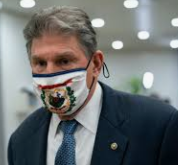
Virginia Senator Joe Manchin as the second most powerful Democrat in the country or as a royal pain. Maybe he’s both. That’s what makes taking a hard look at the 73 - year old third term senator and former governor of the Mountain state worthwhile. Manchin now plays a huge role in every political calculation in Washington and he’s apparently enjoying it.

With Democratic control of the

senate hanging by a thread, Manchin’s made his mark. He blocked President Joe Biden’s nomination of Neera Tanden as budget director and kept the $15.00 minimum
wage out of stimulus legislation. He opposes D.C. statehood, objects to universal background checks on gun purchases, and apparently won’t back eliminating the senate filibuster.

Manchin isn’t on board with the size of Biden’s $2 trillion infrastructure bill. He says he wants a bipartisan infrastructure deal that doesn’t “abandon” Republicans.

So, we ask: what’s up with Manchin. We look at the same facts, but see different things:


Woodson: A Democrat in 

Republican Appearance? 

Understanding Manchin requires understanding West Virginia. The state is 92 percent white, four percent black, 0.997 percent Hispanic, and 0.737 percent Asian. It’s wracked by poverty, addiction, and low household incomes. Richard Ojeda, a West Virginia politician says the choices for high school graduates are, “dig coal, sell dope, or join the Army.”

Until 2005, the West Virginia Senate was 21-13 Democrat. Its House was 72-28 Democrat.  In 2014 West Virginia’s House turned Republican for the first time in 83 years. The state elected its first GOP U.S. Senator in 60 years and sent a totally Republican House to Washington for the first time in 60 years. Donald Trump trounced Hillary Clinton by 42 points in 2016 and Biden by 39 in 2020.

Manchin, nonetheless, has maintained his senate seat since 2012. Until Biden’s election, Manchin was relatively insignificant. Now holding a decisive vote, he has become significant. Conservative votes increase his re-election prospects. He is not beholden to Democrats. They need him more than he needs them. He might be the only Democrat capable of holding that seat.

West Virginian Christopher Reagan, Jr. recently wrote in the Atlantic that “Manchin does not have an overarching ideology.”  True? Perhaps Manchin votes conservatively with political calculation. He voted to confirm more than 100 of Trump’s nominees. None required his vote. He voted for Brett Kavanaugh’s Supreme Court nomination after it became clear Republicans had enough votes for confirmation.

Manchin voted to save Obama Care,saying Medicaid expansion was good for West Virginia. While he made sure top income earners were excluded from Biden’s stimulus package, he voted ‘yes.’  He agrees that if Republicans won’t support an infrastructure package Biden will have to proceed without them.

Will Manchin become a Republican? He’s not fond of GOP leader Mitch McConnell who vowed he’d “crush Manchin like a grape” in the 2018 midterms. After his three-point victory, Manchin delivered a jar of hand crushed grape jelly to McConnell’s office.

Manchin said of Biden in The Hill, “I

think he’s a good human being, just a good heart and a good soul, and he’s the right person at the right time for America.”

Manchin may not be an ideologue. But, he’s a Democrat in a state where Democrats are an endangered species.  


Henry: Mixed Motives?

It seems Manchin has different values

and goals than his fellow Democratic senators. Other Democrats may share some of his ideas, but they don’t act on them with the force and determination he exhibits. Whether his behavior represents political expediency, principle, or the enjoyment of personal political power, he walks a tightrope.   

The turn in his West Virginia constituency away from its Democratic roots likely explains some of his actions. Manchin can win in his state, but he’s not so popular he can deviate far from the views of white West Virginians. If he seeks another term in 2024, he’ll find

himself on the ballot with a strong Republican candidate atop the ticket. His political position offers little margin for error, so the last thing he needs is being on record in support of things the West Virginia electorate would find objectionable.

But home state political considerations

may not totally explain Manchin. Perhaps he believes in what he espouses, even if he’s not an ideologue. Beyond that, Manchin occupies a unique position in the American government. He has some control over the nation’s agenda. That he can use that control in service of his own political survival could mix with principle and the hubris all political figures experience when other people must come to them for things they want. Maybe all of that is going on with Joe Manchin.            


Rob: All About West Virginia

As much as any state, West Virginia symbolizes the changing appeals of America’s two parties. West Virginia

was solidly Democratic when the party’s fundamental appeal was economic populism aimed at white, working class voters. West Virginia has many more coal miners, factory employees, and construction workers than tech types, suburban professionals, and financial industry workers, now the backbone of the Democratic coalition in blue states. Add that to the dearth of voters of color and it’s no wonder West Virginia votes as it does in presidential elections. So, Manchin must represent this constituency while being part of a national party that wants a more progressive nation.  

Culture plays a huge role in this. When the Democratic Party became the party of protecting reproductive freedom, promoting LGBQT rights, and supporting gun safety measures, West Virginia’s white voters fled. Those issues drive the margins Republicans rolled up in recent presidential elections. Manchin knows where the voters are in his state and he’s not risking getting on the wrong side of them, economically or culturally.

Thursday, May 13, 2021

THREE TAKES ON THE BIDEN AGENDA


 President Biden laid out his ambitious agenda in a generally well-received speech to a pared down, socially distant joint session of Congress on April 28. The president apparently has the wind at his back in terms of public support for the measures he’s proposing. Polling indicates voters, including many Republicans, back Biden’s proposals.

That does not mean he has Republican support in Congress. If much of his program becomes law, it will happen because Democrats unify and pass

financially related matters through budget reconciliation. The fate of voting rights and police reform measures, to which reconciliation doesn’t apply, remains doubtful.

Though all three of us count ourselves as supporters of the president and his administration, we don’t have a unified view of all Biden’s proposals.  The differences are sometimes subtle and can turn on political calculations, not substantive policy views:


Henry:  All In                                                                   

Biden’s overarching themes hold great appeal for me. I particularly like the fact he has cast his program in terms of creating opportunity out of crisis. The United States still faces the pandemic and the economic fallout it created, not to mention potentially existential

threats in climate change and systemic racism. As Republicans increasingly claim systemic racism doesn’t exist, Biden and other progressives must push for changes in policing and attack economic inequality. These difficult issues offer an opportunity for much needed solutions we’ve put off long enough.


Biden has also struck a chord with me by emphasizing that his plans address the nation’s

need for reality and hope. That means legislation and an administrative approach that tackles problems in
concrete ways and offers Americans hope they can have better futures and an efficient government that works.

As for the individual components of Biden’s legislative agenda, I offer my total support on rejoining the Paris Climate Accords, reforming and revising the corporate tax structure so the wealthy and big business pay their fair share, universal background checks for firearms purchases, an end to so-called ghost guns that law enforcement can’t track, recasting the ways we look at and think of infrastructure, and creating a citizenship path for undocumented immigrants.

President Biden is on the right track and I’m there with him.

Woodson: Congress, Your Move                         

I find little in Biden’s speech with which to disagree. We will have to wait and see how
many of Biden’s policies become law. I hope they all do. These policies are the most progressive since Franklin Roosevelt’s New Deal.   


Reminding his fellow countrymen that he is a man of action, Biden opened his speech by pointing out that his AMERICAN RESCUE PLAN had already resulted in $1,400.00 checks reaching 85% of American families and 220 million Americans receiving Covid-19 shots. 

Biden elaborated further on his agenda:

AMERICAN JOBS PLAN – jobs in theconstruction of roads, bridges, rails, transit lines, replacing lead pipes in schools and day

care centers, and bringing high speed internet to the entire country. He urged Congress to pass pay equity legislation for women and endorsed $15.00 as an hourly minimum wage.

AMERICAN FAMILIES PLAN – 2 years of quality preschool and 2 years of free community college; $3,600.00 in childcare tax credits; greater investment in black, and tribal colleges.

AMERICAN RESCUE PLAN – lower premiums and deductibles for persons who get their medical insurance through the Affordable Care Act; and a reduction in the cost of prescription drugs.

Biden will pay for this with no increase in taxes on the middle class or poor. Only individuals and corporations who make more than $400,000.00 annually will experience a tax increase.

Biden announced the withdrawal of troops from Afghanistan but remained committed to fighting terrorism abroad and at home,

saying that white nationalists were the greatest terrorist threat that the nation faced. He mentioned George Floyd by name when urging Congress to pass legislation to insure equitable policing and urged the passage of the John Lewis Voting Rights Act.

In my view, Biden got the policies and the politics right. Congress should pass the necessary legislation.


Rob: Consider at Least Tapping the Brakes


I’m generally supportive of the administration’s

agenda. We must address infrastructure and climate. The corporate tax structure requires a  fix even if the federal government didn’t need one additional dime for Biden’s program or anything else. I see raising taxes on corporations and the wealthy as the necessary first step in ending our grotesque income inequality problem.


That’s the primary beef I have with the Bernie SandersElizabeth Warren economic and tax

programs from which Biden has borrowed so  heavily. They propose tax increases for new spending. I propose tax increases because we  need a fairer tax system in which everyone pays their just share. Enacting the
tax increases without 
as much spending as Biden plans would make us a more equitable society and likely spur an economic revival reminiscent of the Clinton years. Forty-two increased taxes on upper income taxpayers and wiped out the deficit in the process. He presided over modest spending increases, but the main impact of higher tax revenue was holding down interest rates. Government borrowing didn’t absorb capital that became available for businesses, large and small.  We experienced prolonged growth that lasted into the George W. Bush years.

We should do much of what Biden proposes. I’m not interested in giving aid and comfort to obstructionist Republicans by opposing him. If I were a senator, when push came to shove,
I’m
 sure I’d vote for his bills. We might, however, consider doing what he wants in bite-sized chunks. Just saying, you know.  

Tuesday, February 2, 2021

FIRST BIG DECISION FOR THE BIDEN ADMINISTRATION: THE CLOCK TICKS


Joe Biden and Kamala Harris took office January 20, assuming the burden of righting the American ship. They have a big job and not long for getting it done.  They’ll have

tough decisions before long. Political reality and history teach that the clock has already started ticking on what they can accomplish.

Presidential terms run four years, but windows of opportunity for passing major legislation close quickly under the weight of pent-up frustrations in a president’s own party, approaching mid-term electionsand opposition candidates revving their engines on runways for the next presidential race. Biden enjoys no exemption from this cruel cycle. Anyone looking hard enough can 

see it looming in the distance.


Biden’s Burden

Biden’s first days have made clear his priorities: (1) get the pandemic under control,(2) fix the related economic problems, (3) address climate change, and (4) attack racial injustice. Biden’s team acknowledges things like infrastructure, tax reform, and rectifying some of former President Donald Trump’s  excesses must wait. That array of priorities creates challenges and opportunities.


Fires rage around the four priorities and many reasons exist for tackling them first.  The country watches carefully. Other than the rabid COVID-19 deniers, most Americans want an end to the death, pain, and personal sacrifice that go with the pandemic.  We can’t imagine anyone being happy with the job losses and business disruption. Many of us have been railing about climate change and racial injustice for years. A strong desire exists for taking on Biden’s targeted issues.

That doesn’t mean his solutions will get unanimous support, or even enough for solid progress. He has offered big, bold proposals for dealing with all four problems. He wants, for example, a $1.9 trillion COVID-19

relief package that includes big stimulus checks, minimum wage increases, significant dollars for cash-strapped state and local governments, and vaccine distribution money.

That’s where the hard choices come. Because Biden’s proposals will draw Republican opposition – even obstruction – he soon must choose between proceeding in the bipartisan way he prefers and taking what he can get with only Democratic support. Thanks to Harris as vice president, he enjoys a one-vote majority in the senate. Speaker Nancy Pelosi presides over a narrow Democratic advantage in the House. Biden has so far refused invitations to set deadlines, but everyone expects a day of reckoning will come. He can keep seeking bipartisan approval or go it alone, knowing he must act quickly or lose his chance. 


The Politics

Right now, Biden’s Democratic support results from a coalition of the willing. Moderate

Democrats cut in the mold of senators like Dick Durban of Illinois and John Hickenlooper, a rookie from Colorado, and progressives like Senator Elizabeth Warren of Massachusetts and New York Representative Alexandria
Ocasio Cortez remain on board. Nobody knows how long Biden (and Harris) can keep this fragile alliance together. He’s avoided a fracture by making cabinet and staff appointments that have something for everybody and issuing executive orders addressing the pent-up frustrations of both sides of his potentially divided house, a house motivated by intense distaste for Trump. With Trump gone, how long this glue sticks remains an open question.   

Across the aisle, some Republicans see the virtue in working with Biden. How many isn’t clear. It’s likely a small number in either house of Congress. Assuming the filibuster rule remains, if it’s ten in the Senate, Biden could get 60 votes and potentially pass broad legislation, like he’s proposed on COVID-19. If it’s one or two, or zero, he’s probably reduced to a stand-alone vaccine distribution bill many Republicans would vote for or something he could pass under budget reconciliation that only requires 51 votes. It’s hard to imagine what such bills would look like, but they won’t have the big, bold provisions Biden wants.

Many Republicans will say they oppose Biden’s bills – especially the COVID-19 relief package -- because of cost. Ordinarily they’d have a point, but under the current unique circumstances, their argument holds much less weight. With interest rates as low as they are, the government can borrow for a big relief package for next to nothing. Given how much the pandemic costs in health care expenses, lost tax revenue, and infrastructure expenditures incurred in fighting the disease, arguably the nation can’t afford not enacting a big package.  


A Little History

Biden should keep in mind Barack Obama’s

2009-10 experience with the Affordable Care Act. Obama believed he could get Republican support if he scaled back the bill by (1) leaving out a public option and (2) modeling the program after what Mitt Romney implemented in Massachusetts. Democrats screamed, but Obama held firm. GOP votes  never came and Obama, having lost his 60-seat senate majority with the
death of Ted Kennedy and the surprise victory of Scott Brown in a Massachusetts special election, settled for no public option and passing the bill under 

the reconciliation 

procedure.


Biden was there, of course, as vice president, so he’s  aware of the dilemma he’ll soon face. The fact the country wants COVID relief as 

badly as it does arguably gives him cover. If he can make real progress on ending the pandemic, many people outside Washington won’t care what he asked Congress for and did or didn’t get. He can declare victory and take on the next problem with good will stored away.

Biden doesn’t have forever. Republicans have started showing their hand, complaining about the size and scope of many of his proposals and asking why he hasn’t  consulted

more with them. Nearly everyone wants bipartisan solutions to the nation’s problems -- except those who don’t and, unfortunately, some of them serve in Congress.   


Monday, October 28, 2019

LOOKING AT 2020 BEYOND CANDIDATES: WHAT’S REALLY AT STAKE

A clear distinction has emerged among the three of us in terms of our preferences in the race for the 2020 Democratic
presidential         nomination. We’ve realized the reasons for those differences go beyond merely liking one candidate’s health plan over another’s. What each of us wants in a 2020 Democratic standard bearer reflects our view of where this country should go politically and culturally in the next few years and what the 2020 election stands for as a marker in our politics. Here we offer a first look at that dichotomy (or perhaps, in our case, a trichotomy). We recognize explaining all this may require more than one 980-word blog post.


Woodson:  A Time for Bold Action
The problems we face require more than snip-around-the-edges incrementalism. We need reform of our immigration laws – specifically a change to our family separation policy; a health care system that makes health care affordable to all. The Trump tax cuts for
multi-millionaires must be rolled back. Those revenues should be devoted to development of our roads, bridges, and schools. Our children should have an opportunity for a vocational or college education, similar to how all Americans are now afforded a public primary and secondary education. The criminal justice system  should
be reformed so that charges and sentences are not influenced by the defendant’s ethnicity or economic status.

In convincing some Caucasian Americans their enemies are undeserving black and brown people, President Trump lowered the taxes of the rich and further divided the nation on the basis of race, national origin, and social strata. It is time to address the concerns of all Americans.  These objectives are not inconsistent with Rob’s desires for the nation. 

The interests to which I refer should not wait. Incrementalism has historically meant that the
needs of people of color - namely African Americans - must wait. Roosevelt’s New Deal was good for most white Americans, but in too many instances came at the expense of blacks. Roosevelt even refused to support an anti-lynching bill because he wanted southern white congressman to sup-
port his New Deal legislation. It is time to look out for all our citizens. The country’s leadership must be bold and “walk and chew gum at the same time”.  I do not agree with Rob’s notion that moving forward with a progressive agenda will make the fight for President’s Obama Affordable Care Act look like a “sixth-grade playgroud skirmis". The grade playground skirmish”. The legislation to make these changes has already been passed in the House of Representatives. It just needs to be passed in the Senate and signed by the President. In any case some goals are worth the skirmishes.  


Rob: Get Back to Normal First
While I share most (not all) of Woodson’s policy objectives, I believe the next president has a more pressing obligation. She or he must reinstate normalcy after the disaster of the Trump presidency. I see three things as essential: (1) restore respect for the rule of law; (2) operate the federal government without scandal and daily turmoil; and (3) repair our alliances around the world, thereby protecting our national security in a way consistent with our values and those of our allies.
Woodson’s agenda comes with two significant risks. First, a president seeking enactment of many of these proposals will embroil the nation in bitter partisan wrangling that will make the conflict over President Obama’s effort at passing the Affordable Care Act seem like a sixth-grade playground skirmish. Second, the political
backlash will likely consume that president and make him or her a one termer. Keeping a Democrat in the White House for at least eight years so we can flip the Supreme Court is much too important to sacrifice for the possibility of pipe dream policy proposals that will likely never become law.  For the most part, I’m with my brother Walker on where he wants to go, but first things first.   

Henry: Oh, I See What you’re Saying
Rob likes telling the story of one his first-year law professors who had the admirable quality of patiently listening to mostly incorrect answers given by students called on in class by gently telling them, “Oh, I see what you’re saying.” Professor Smith then steered the class to the right answer by picking out a few things the erring student said and weaving the correct answer into his response. I feel that’s the appropriate reaction to my colleagues. I fear they’re both right and both wrong and I should guide them both to a better place.
I wonder if where Woodson thinks America should go now and where Rob wants to go are that different. Will, fifty years from now,
America look that different under one vision than the other? Rob acknowledges he shares most of Woodson’s policy prescriptions (as do I). He just thinks we have more pressing problems now, that the house is burning down and putting out the fire takes precedence over building a new house.  But, he admits, the new house he’d build looks much like the house Woodson thinks we should start on now. 
 
The danger in Woodson’s do-it-now approach
lies in the risks Rob identifies – turmoil and potential backlash. The danger in Rob’s incrementalism lies in the injustice of putting off things that keep get-
ting put off.  As Martin Luther King, Jr told white ministers in his Letter from Birmingham Jail, the well-meaning moderate advocating patience often poses the greatest obstacle to justice. Civil rights couldn’t wait and some of the things Woodson thinks we should tackle now shouldn’t wait either.
 
Endless Conversation
We’ve only scratched the surface of this topic. Exploring ideas and differences like this forms the rationale for why we do this each week. Our masthead says “Endless Conversation.” The need for exploring topics like this demonstrates why that’s more than a slogan.