Showing posts with label Lyndon B. Johnson. Show all posts

Wednesday, October 13, 2021

TRUMP AS FORMER PRESIDENT: A DISCORDANT OUTLIER

Over the 245 years of the American republic, the people of the United States have come to expect certain behavior from former presidents. As with every other aspect of his association with the presidency, Donald Trump now flaunts those expectations. His conduct looks especially egregious when compared with his real peers, other one-term presidents. No matter how long his predecessors served, however, Trump looks like an aberration. 

During our lifetimes, the United States has had three one-term presidents, chief executives who got elected, served one four-year term, stood for re-election, and lost. This definition, therefore, does

not include John Kennedy, Lyndon Johnson, and Gerald Ford. Kennedy won one-term and was assassinated. Johnson finished Kennedy’s term, won one of his own, but didn’t seek re-election. Ford succeeded Richard Nixon after his resignation, but lost the 1976 election


The presidents who fit our definition come from both parties – Democrat Jimmy Carter (1977-81) and Republicans George H. W. Bush (1989-93) and Trump (2017-21). The similarity in conduct between Carter and Bush, as one-term former presidents, when juxtaposed with that of Trump, provides more evidence of 45’s decadence.

The Former President Model

Our constitution says nothing about the “role” of a

former president. We established the  conventions and traditions by example. The nation’s first president, George Washington, served two terms and didn’t run again mainly because he worried about doing anything that resembled a monarchy.


The colonists fought a bitter war for independence from a tyrannical king. Washington wanted nothing that suggested the new country was installing something similar. 

The two-term maximum continued as an informal limit on presidential tenure until Franklin Roosevelt won four terms, prompting the 22nd amendment that made the two-term limit law.  The country has

had 13 two-term presidents, along with some who got reelected but couldn’t finish their terms for reasons like assassination or scandal (Abraham Lincoln, Nixon). We’ve had eight one-term presidents under our definition.  There’s also the strange case of Grover Cleveland who was elected in 1884, lost in 1888, then regained the office in 1892 and served out that four-year term.

By and large former presidents, whether they served one term or two, have assumed a senior statesman role. Generally, they’ve left themselves out of the country’s day-to-day political machinations.


James Earl Carter, Jr. and George H.W. Bush

Jimmy Carter and the first Bush weren’t much alike as presidents. In truth, they weren’t all that alike as former presidents except in ways that speak volumes about how they conceive of the

presidency. Carter devoted himself to good  works – helping Habitat for Humanity, promoting election reform in the third world, fighting poverty, etc.  The first President Bush spent more time doing things people do when they’re retired, though he took on humanitarian relief projects at the behest of his son, President George W. Bush. These included joining in 2005 with the man who defeated him, Bill Clinton, in raising money for tsunami victims.   

If Carter and Bush did some things differently in their post-presidential lives, they also did some important things alike. Neither injected himself into politics much beyond benign activities like speaking at his party’s convention and receiving the party’s nominee during the fall campaign. Both honored the office they held by quietly counseling their successors when asked and behaving as if their election hadn’t anointed them with a divine right to influence and manage the political process though they no longer occupied the oval office.


Trump’s Mischief

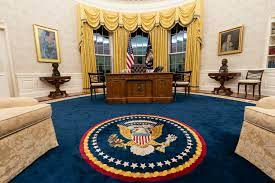
Since landing at Mara Largo on January 20 this year, Trump has remained a loud political  presence. Though social  media companies banned

him for distorted, untrue statements on their platforms, at rallies, through press releases, and in interviews on friendly outlets like Fox News, Trump infects our politics on a daily basis. He retains the loyalty of millions. He keeps raising money for future campaigns and, no doubt, his own use, including his mounting legal bills. He blesses favored candidates and meddles in Republican politics nationwide.

In some states, winning a Republican primary requires Trump’s endorsement. Even established GOP leaders will bow to his wishes because they so fear being out of favor with his voters. Recently, he pressured Texas Governor Greg Abbott, a Trump sycophant now faced with dropping poll numbers in his state, into ordering an “audit” of Democratic-leaning counties, even though Trump carried Texas in 2020 by 630,000 votes. No one could imagine Carter or H.W. Bush doing such a thing.

Trump, of course, keeps hinting he’ll run again in 2024. Some people who know him think he can’t resist, while others believe he won’t because he can’t stand the prospect of another defeat. He did, however, recently hold a rally in Iowa, a key early state on the 2024 primary calendar.

We know Barack Obama and Bill Clinton, both two-term presidents who can’t run again

themselves, have campaigned for Democratic nominees who wanted to follow them into the oval office. Obama, particularly, helps Democrats raise money,
partly through direct mail solicitation of small donors.  But neither has muddied the water like Trump (nor has Trump’s fellow Republican, two-termer  George W. Bush). Neither has thumbed his nose at the expectation former presidents will maintain a sense of decorum and behave as protectors of the instruments and traditions of democracy.

The American presidency was never intended as a repository for unfettered political ambition or as a mere vessel for accumulating power its holder could dispense in service of those ambitions. By tradition and experience, the nation established norms for former holders of the job that honor the limits we put on the office itself. Trump has disregarded those, just as he flaunted so many norms while he was president.  The country should call out his behavior.  We just did our part.     


Monday, May 11, 2020

PICKING A VICE PRESIDENT: START WITH WHAT, NOT WHO.


PERHAPS JOE BIDEN’S MOST IMPORTANT DECISION


Former Vice President and presumed
Democratic presidential nominee Joe Biden has named his vice presidential selection steering committee. The group will help Biden with vetting potential running mates. Biden has already said he will choose a woman.
In due course, we’ll weigh in on prospective candidates. Pundits are floating about a dozen names. With the pick not
expected until late next month at the earliest, we’ll have time to comment on the pros and cons of possible choices. For now, we focus on what Biden should look for, not who


The unique circumstances in 2020 make this selection that much more important.  If
elected,  Biden would take office at age 78, older than any person ever upon first inauguration. He has hinted he wouldn’t seek a second term, putting his vice president in prime position to succeed him. Since the Second World War, six vice presidents have gone on to become president. In that same period, no major party has denied the presidential nomination to a vice president or former vice president who sought it. 

So, what qualities should Biden seek? We each made lists and factored them together, arriving at a four-part test we now present in no particular order. Each of us may assign more importance to one or another of these traits, but we really want someone with all of them.

Electability: You can’t Save Souls in an Empty Church
All three of us recognize the vice presidential candidate must help Biden
The Nightmare - The Art of Mark Bryan
win the election and end the Donald Trump nightmare. Woodson goes so far as to list the states – Wisconsin, Pennsylvania, Michigan – he thinks the vice presidential candidate must help Biden carry. Ideally, the person could help turn out core Democratic voters – blacks, browns, millennials, suburban women – perhaps putting in play states like Texas and Georgia.

The research on how much a vice presidential candidate can help presents
a mixed bag. A few
studies say the second banana can make up to a three-percentage point difference. Others say it’s less, if any.

There’s disagreement about whether a vice presidential candidate can help carry a particular state, especially the candidate’s home state. John Kennedy – and most analysts of the 1960 election – believed Lyndon Johnson secured Texas for the Democrats that year. Some think Tim Kaine helped Hillary Clinton carry Virginia in 2016. On the other hand, Lloyd Bentsen couldn’t help Michal Dukakis win Texas in 1988. John Edwards didn’t claim North Carolina for John Kerry in 2004.

The Ready-to-Play Test: Can She Be President?
Henry states this as a matter of “experience in governance.”  For Rob, it’s “gravitas” – can we envision the vice president as commander-in-chief, confronting a foreign crisis (or a national pandemic)?  In the event of Biden’s death or incapacity, could the new or acting president rally the nation to a cause? 

John McCain paid a huge price for picking someone unprepared for national office in Sarah Palin. Though she gave McCain an initial boost in the polls, the more exposure Palin got, the worse the choice looked.   
Some of the women being suggested as possible running mates for Biden don’t offer the kind of resumes vice presidential candidates historically present.  They’ve only served as state legislators, been mayors, or briefly held
congressional seats. Only one or two have
foreign policy experience. We know the paper resume doesn’t mean everything, but it has some importance.

Compatibility:  Are They on Same Page?
We had different ways of putting this point, but the more we thought about it, the easier reconciling our views became. All three of us think the president and vice president must  unify on policy, with the vice president strongly advocating the president’s agenda, even if she disagrees internally. Biden has said, based on his experience in flying right seat for Barack Obama for eight years, he wants someone who will dissent within the councils of the White House, but will go out and push for whatever final decision he makes. 

This presents more of a problem than might appear at first glance. Lyndon Johnson was miserable as vice president because of the way the Kennedys cut him out of a meaningful policymaking role. He was never an effective spokesman for the New Frontier. Former president Bill Clinton and James Patterson, in their bestselling novel The President is
Missing,
 present a vice president with resentments and a separate agenda that, for a time, appeared to threaten the nation. Biden should pick a team player and treat her as such. 

Restorative Capacity: Putting the Country Back Together
Even if the coronavirus hadn’t ravaged the nation’s health and its economy, any Democrat elected in 2020 would face a monumental job in restoring the country's moral authority. Diminished respect for the
rule of law, broken
foreign alliances, mistrust based on ethnicity and hyper partisanship represent just some of the intangibles a new administration will face. The pandemic won’t have gone away by January 2021. A new vice president may have a big role in helping with the remaining economic and public health consequences.

Woodson says he wants a vice presidential candidate who can “relate to a broad coalition of people.” The vice president will need that capacity in helping Biden restore America’s place
and standing in the world. She must help the president bring together a cross-section of America in support of the reclamation project the next administration must undertake.

Our criteria ask a lot of potential vice presidents, but we don’t think we ask too much. Biden, if he wins, will have a big job. The woman on his wing will have a lot to do. 


Monday, July 1, 2019

THE FOURTH OF JULY, THE FIRST AMENDMENT, AND A GREAT WRITER

Rob pays tribute to our constitution and a national treasure.

This week brings the Fourth of July and its parades, picnics,
and flag waving. For me, the Fourth of July means reflecting on the best of America and how we make it better. Henry, Woodson, and I write a lot in this blog about what would improve America – racial justice, economic equality, political stability. Today, I write about two things already good about America – our First Amendment and a writer it protects named Robert A. Caro.
 
In case you don’t know Caro, I’ll provide an introduction.Robert Caro has written two Pulitzer Prize winning books, won two National Book Awards, and captured three National Book Critics Circle Awards. President Obama awarded him the National Humanities Medal. He began as a newspaper reporter, then turned to writing books with publication in 1974 of The Power Broker: Robert Moses and the Fall of New York. That launched his career, but the four volumes of The Years of Lyndon Johnson made his national reputation.

I got a treat when I ran across Working: Researching, Interviewing, Writing, Caro’s new, 207-page memoir of his writing career. I flew through it in two days. It inspired my own writing ambitions and made me realize, as the Fourth of July nears, how fortunate I am in living in a country that allows the work of a Robert Caro. Because that work explores and explains political power, including its excesses and misuses, some countries would quash it and punish anyone doing that work. Through physical intimidation or vexatious, unfounded libel suits, Caro’s volumes would never see the light of day. In America, Robert Caro flourishes. Indeed, I only pray he can finish the fifth and final book in the Johnson series. He is 83 years old. 

The Johnson books
Caro published his first Years of Lyndon Johnson volume, The Path to Power, in 1982, while I attended graduate school at the University of Texas. I worked then for Texas Attorney General (later Governor) Mark White. Many of those around White were old LBJ hands. Naturally, the book keenly interested them, so I ran out and bought a copy. Over the next two years, between graduate papers and starting law school, I struggled through Path’s 848 pages of text and notes. Reading it that way prevented a full appreciation of Caro’s narrative gifts, but I didn’t miss the thoroughness of his research or the comprehensiveness of his effort at understanding Johnson’s native Texas Hill Country.

Path’s dust jacket promised two more volumes (as indicated, we now await number five). When the second, Means of Ascent, arrived in 1990, I found myself immersed in raising children and working at making partner in a big law firm. Though shorter at 482 pages, it went on my shelf, unread.

I didn’t even buy the third volume, Master of the Senate,on its release in 2002, scared off by its 1141 pages of text and notes. Shortly after Caro published Master, because of my work with the Texas Freedom of Information Foundation, I ended up on the mailing list of Democratic kingmaker Bernard Rapoport, a millionaire Waco, Texas businessman known for financing dozens of U.S. Senate campaigns. Rapoport distributed hundreds of copies of Master, including one to me. It too went on my shelf, unread.

Tragedy leads to enlightenment
In 2009, my wife got sick. Ida didn’t survive cancer, but her illness was not for naught. While she underwent chemotherapy and radiation treatment, I sat with her, just being there. Often I read, in a doctor’s office or at home, while she slept or tried reading herself. Hearing about the awards Caro won for his books, I pulled Master off the shelf and read it during that trying year and a half while Ida fought for her life. 

The book enthralled me, especially the part about Johnson, as Senate Majority Leader, spearheading passage of the
Civil Rights Act of 1957 over the opposition of his ally and friend, arch segregationist Richard Russell of Georgia. I also saw Johnson’s other side, in his ruthless destruction of the career of a man named Leland Olds. When their battle ended, Johnson told him, “there’s nothing personal in this …[i]t’s only politics, you know.” 

Reading Master enticed me back to Means of Ascent and its story of how Johnson stole the 1948 Senate race from former Texas Governor Coke Stevenson by 87 votes, leading to Johnson’s nickname, “Landslide Lyndon.” Caro tracked down the man who arranged and reported the fraudulent votes that gave Johnson victory and saved his political career. From that point, I was hooked.

I could barely wait for the 2012 release of The Passage of Power, detailing Johnson’s futile 1960 run for President, his miserable years as Vice President, and his November 22, 1963, ascension to the Presidency. I read the book in Ida’s memory, gratefully celebrating our precious hours together during her final days. 
Caro and the First Amendment
Because of Robert Caro, we better understand how government works, for good and ill. We see political power’s uses and abuses. Caro said in Working people often ask why writing his books takes so long. Read one and you’ll see. It takes so long because he tells us so much. Thanks to the First Amendment, Caro can tell the whole story. That he can is one of the things for which I am grateful this Fourth of July.    

Tuesday, January 30, 2018

A Little Light Reading: Our Top Three Books on Understanding Race in America

The three of us read a lot because (1) we each enjoy it, (2) we think it essential to being informed citizens, and (3) it’s crucial to this enterprise.

Because we read as much as we do and because we spend so much time interacting with people about the things we care and write about here, friends and readers sometimes ask us what books we think will increase their understanding of the topics we discuss with them, especially race. We thought we’d offer some reading suggestions – a Top Three, if you will – recognizing our list isn’t gospel and others might present lists that would impart as much or more knowledge.

What Missed The List?
We’ll start by recognizing some great works that didn’t make our top three.

The New Jim Crow by Michelle Alexander garnered a great deal of attention during the 2016 campaign for its focus on mass incarceration.

James Baldwin’s Go Tell It on the Mountain and Ralph Ellison’s Invisible Man retain their places as classics, essential to understanding this issue.


Master of the Senate, the third book in Robert Caro’s The Years of Lyndon Johnson series presents an excellent account of early legislative efforts on civil rights.

One friend reminded us that Colored People by Henry Louis Gates offers rare insight into the culture of black America outside the South as the civil rights era dawned.

The same friend extolled the virtues of Days of Grace, Arthur Ashe’s wonderful memoir about his experience as a black athlete in a white sport and as a black man in America.     

But, we have our favorites – three books we regard as critical to understanding where we stand with race in America today and how we got here.

Our Top Three

Wilkerson, an African American woman, is a Pulitzer Prize-winning journalist and it shows in her compelling narrative about the twentieth-century African-American migration out of the Jim Crow South to the North and West. She gives us the story through the experiences of real people: a Florida orange picker who finds a new life in New York, yet still must cope with returning regularly to the segregated South in his job as a railroad porter; a Mississippi sharecropping family that moved to the Midwest only to confront the restrictive ethnic zoning rampant in the urban politics of Chicago and Milwaukee. A doctor from Louisiana who drove across the desert to resettle in California. The black exodus from the South makes up an important part of American history and Wilkerson tells the story with verve and compassion.


The Half Has Never Been Told explains the role slavery played in America’s development as a commercial powerhouse in the world economy. Along the way, it explodes many myths, most significant among them the idea the United States became a significant player on the world economic stage after the civil war ended slavery.

In this exhaustively researched book, Baptist, a white son of the South, shows how slavery and the cotton-based southern economy made the United States a world commercial player well before the war. Warning: While the book is profoundly informative, it is not comfortable to read. Baptist, a Cornell University professor, comes at this topic with data and analysis. Narrative takes a back seat.

Getting through The Half Has Never Been Told requires a certain level of compassion and willingness to vicariously experience human suffering. It also requires a strong stomach. Baptist details many of slavery’s horrors. Few “benevolent” slaveholders, if any lived, made the cut in this book. We can’t overestimate the importance of The Half Has Never Been Told to understanding the real history of slavery in America. Rob saw it as significant enough to give a copy to each of his children with the admonition that they read it, “even if you don’t get to it until you’re on your death bed.”
Anyone clinging to the notion that the economic inequality plaguing America based on race occurred by accident must confront some unpleasant, but documented, truths in this book. Relying on government documents and independent studies, Rothstein, a senior fellow at the NAACP Legal Defense Fund and the Haas Institute at University of California, Berkeley, details how court decisions, legislative actions, executive branch policies, and administrative actions drove blacks into segregated neighborhoods, kept white neighborhoods white, and in the process, assured that black wealth would not grow through homeownership, a major way other Americans accumulated assets. This book doesn’t make for comfortable reading either, largely because of the offensiveness of the deliberate acts of racial discrimination it describes.

As we said, there are other books. We think these three present a good starting place.


What are some of your suggestions?