Showing posts with label Coronavirus. Show all posts

Wednesday, March 24, 2021

A SALUTE TO COVID FIGHTERS: SHOULDN’T WE DO MORE?


“I look at it; I view it as, in a sense, a wartime president. I mean, that's what we're fighting”.

Donald J. Trump, March 18th, 2020


“This is a wartime undertaking”.

President Joe Biden, January 21st, 2021


There have been few areas of agreement between Biden and Trump. But they both agree, fighting the Coronavirus is like war.

In every war there are combatants. Some are more essential and more vulnerable than others. This war is no different. Like other wars the risks have not been borne equally.  Those who earn their living primarily by moving

words and numbers around on paper can work from home. Office computers were moved home and Zoom became the thing for holding meetings, conferences, and even prosecuting legal proceedings.


We think that no combatants have been more essential or more vulnerable than
our essential health care workers. They have gone into battle daily since the outbreak of the Coronavirus to take care of our infected loved ones and
comfort them while they suffered and often died, because we could not be at their bedsides. They often worked for minimum wages.

According to a joint undertaking by Kaiser Health News (KHN) a national newsroom that produces in-depth journalism about health issues, and “The Guardian”, in a report published December 23, 2020, more than 2,900 U.S. health care workers died during the COVID-19 pandemic between March 2020 and December of 2020.  People of color have

been disproportionately affected, accounting for about 65% of deaths. The deaths continue.  

Some of these workers worked in plants, in crowded conditions that didn’t permit social distancing. The food industry offered one prime example. Workers in meat processing plants, especially, suffered high rates of infection and death from the disease.


Bearing a Heavier Burden

Many home health providers care for multiple patients, who also bear the consequences of
their work conditions. “If you think about perfect vectors for transmission, unprotected individuals going from house to house have to rank at the top of the list,” said Nina Kohn, a professor specializing in civil rights law at Syracuse University, quoted in the KHN report.

Nonetheless, caregivers like Samira, in Richmond, Virginia, identified in the KHN report, have little choice but to work. Samira — who makes $8.25 an hour with one client and $9.44 an hour with another, and owes tens of thousands of dollars in hospital bills from previous work injuries — has no other option but to risk getting sick.

“I can’t afford not to work. And my clients, they don’t have anybody but me,” she said. “So I just pray every day I don’t get it.”

From Despair to Hope

When we came to understand the deadly nature of the Coronavirus, the nation
faced a calamity like few it had experienced in its 250-year history.  The country shut down and the health care workers on the front line faced the grim task of continuing to treat thousands of people for a disease, medical experts knew little about. We had no drugs proven effective against the virus. Since it was airborne, people
caught it easily from other people. In many cases, the consequences were deadly. Those health care workers found themselves hooking people up to ventilators, knowing their patients would often die anyway. They did so because it was their job.

Worse than the lack of effective treatments was the fact there was no vaccine that could keep people from getting the disease. The only tools for prevention were masks, hand washing,  and “social distancing.”


Vaccine and Hope

Federal agencies began approving vaccines
for use in the United States in late November/early December of 2020. Unfortunately, the federal government didn’t have a distribution plan and left most of the work to the states. Predictably, inoculations lagged in the early months of vaccine availability.  That changed with the beginning of the Biden administration.  The new president made vaccination a high national priority. He set a goal of 100 million shots administered by the end of his first 100 days in office. His team met that goal by day 58. The goal now is sufficient vaccine supply by May for every American who wants it. We can all now see hope.


The national experience with Covid-19 has
shown some encouraging traits in the American character. Yes, we have endured senseless selfishness born of partisan bickering, but when faced with adversity, Americans have risen to the challenge.

Who can forget those inspiring scenes in March, April, and May of 2020 of people
standing on their balconies saluting front line health care workers during shift changes? Such expressions of support now occupy a special place in American lore, joining the spontaneous expressions of patriotism that sprang up after the September 11, 2001, attacks.

Now, with hope and optimism that maybe, just maybe normal appears in sight, we take a few moments and review where we’ve been and where we’re going, from the perspective of the people who’ve borne the brunt of fighting the  war on the pandemic
Coronavirus.  The vaccines now available provide real hope, especially for the people who’ve led the fight against the devastation this virus has wrought.

Many front-line workers are now dead, leaving behind husbands, wives, children,
grandchildren, siblings and loved ones from whom they were taken tragically and some often too soon, or have survived but suffer long term medical consequences.

Is simply expressing our heartfelt gratitude enough? Rep. Norma Torres (D-Calif.) referenced the KHN data citing the need for a pending bill that would provide compensation to the families of health care workers who died or sustained harm from COVID-19.

We believe these combatants deserve the same treatment veterans who bore the brunt of the burdens of wars received - special benefits for their sacrifice.


Wednesday, March 10, 2021

THE PANDEMIC ISN’T OVER: KEEPING OUR EYES ON THE PRIZE

Despite much progress, a threat has appeared that could derail solving the pandemic problem. That threat compels us to join those sounding an alarm.


To some extent, the coronavirus pandemic has always been about numbers. We know many of the painful ones – 29.2 million infections

and 530,000 deaths by the first week in March; about 22 million jobs lost or diminished; 328.2 million (in other words, everybody) lives disrupted. And now, another set of numbers offers hope for an end to the madness – decreased cases, over 59 million people who’ve had at least one shot of vaccine, maybe 255 million people (every adult in the country) vaccinated by summer.

The problem lies in the fact states have started opening their economies by lifting restrictions on capacity in public venues, making social  distancing harder, and eliminating mask requirements. It’s a trickle

now, but it could soon become a flood. As one doctor warned, don’t spike the football after making a few first downs, wait until you’re in the end zone.


What’s Happening

Republican governors in Texas and Mississippi announced recently they’re ending statewide

mask mandates and limits on occupancy in eating places and other businesses, steps already taken by Florida’s Republican governor, Ron DeSantis.  GOP chief executives in Iowa and Montana ended mask requirements in February. Republican governors in Arkansas and Alabama said they’d suspend mask orders in late March and early April, though that move in Arkansas depends on testing results and hospitalizations.

One Democratic governor, Connecticut’s Ned Lamont, kept the mask requirement in place, but eliminated indoor dining capacity limits. He also expanded how many people can attend sporting events.


Different motives likely lay behind these moves, some probably benign, some likely cynical, and some perhaps the result of citizen pressure. Benign explanations included increasing vaccination rates and a declining number of infections. Continuing politicization
of the  pandemic by former President Donald Trump and his allies made it likely some GOP governors simply sought political favor with Trump supporters who never liked masks, social distancing, and other anti-COVID 19 measures. Texas Governor Greg Abbott, in particular, wants to position himself for a presidential run in 2024 and drew blowback from Texas Democrats who suspected a political motive in his roll back order. These actions place political interests above those of the citizenry. 


We admit public pressure could affect some governors. Americans, even those who support mask wearing and other anti-COVID 19 safety measures, are tired of how the virus has disrupted their lives. They want a return to normal, even despite evidence the fight isn’t over. We think such an attitude equates to taking a cast off a broken leg before the bone heals because the patient finds the cast inconvenient. In this instance, removing the cast could have deadly consequences.  


Neanderthal Thinking

Orders issued by Abbott and Mississippi Governor Tate Reeves didn’t go unchallenged. President Biden, who has garnered 70% public approval (44% of Republicans) for his handling of the pandemic, called the moves “Neanderthal thinking.” The president said of the crisis, “It’s not over yet.” He urged that Americans, “Stay vigilant.”


Rochelle Walenski, director of the Centers for Disease Control, expressed “deep concern”
about the trajectory of the pandemic, and added, “Now is not the time to relax critical safeguards.” Other public health experts like Dr. Anthony Fauci also warned against prematurely discarding masks and social distancing requirements. 


A Personal Story

One of us, Rob, suffered a severe case of COVID 19 last fall, spending five days in a hospital, three of them on oxygen, though not a respirator. After a harrowing day of hallucinations (“I thought I was walking on the ceiling,” he said), his condition dictated treatment with experimental drugs and steroids. Almost as bad as the hospital time was the recovery. Unlike the recovery from other illnesses in a life of almost seven decades, this recovery featured not a smooth road back to good health but resembled a discomforting trek along a jagged, uneven path littered with rocks and boulders. For every two steps forward, the route required at least one backwards. For the better part of a month after the hospital, nothing tasted good, not even water. The sense of smell vanished. Yes, some people suffered mild forms of the illness, but no one should underestimate the perils of even a moderate case. This isn’t the flu. Rob’s advice: Do everything possible to avoid getting this disease.


A War Metaphor

After a vigorous discussion, we found ourselves agreeing with Woodson’s label of
“irresponsible” for those who give in to impatience and prematurely discard measures that health experts know stop the spread of
COVID 19. He  has a point that this is a war, as 

the infection and death numbers show. An army can’t quit before winning the war, especially not with victory in sight, when a loss could decimate the entire army.


Through the efforts of scientists, we
have 
vaccines that work. Thanks to now having a president who takes the issue seriously, vaccine distribution works. The president says by the end of May every adult American, about 255 million people, who wants a vaccination can get one. That’s a real win. We can lose now only by giving the game away. No reason exists for doing that. We can make the numbers work now.  


Monday, February 22, 2021

AMERICA’S CLOSE CALL WITH LOSING DEMOCRACY: THE 2020 ELECTION STORY THAT’S BARELY BEEN TOLD


At first, we thought the end of the impeachment trial marked a good time for turning the page on Donald Trump and the 2020 election. The new administration certainly has turned the page, as President Biden’s recent Wisconsin and Michigan trips, his first since taking office, indicate. Biden and Vice President Kamala Harris revved up their campaign to build support for the administration’s $1.9 trillion coronavirus relief package. It appears they’re making headway. Polls showed Biden’s approval rating over 60% and support for the virus legislation nearing 70%.

One thing, however, caught our attention and made

us consider something about the election we can’t ignore –the danger democracy faced and escaped. The February 15/February 22 issue of Time Magazine includes a stunning report about the unprecedented effort by Americans of all political stripes to save the 2020 election. These Americans, first and foremost, wanted a fair election. Their objective was not engineering a victory for either side. The story hasn’t gotten the attention it deserves. According to Time, the key participants say they “want the secret history of the 2020 election told,” so we decided we’d help them get it out.

Molly Ball wrote “How Close We Came: The Secret History of the Shadow Campaign that Saved the Election.” She details how business interests, labor unions, and social activists made “sort of an implicit bargain” in which they came together to“keep the peace and oppose Trump’s assault on democracy.” It started with a man few people have heard of, Mike Podhorzer, and wound up involving hundreds of Americans from different political orientations.


Beginnings – Fall 2019 

Podhorzer’s political roots grew in union soil. He served as senior adviser to the leadership of the
AFL-CIO and developed a reputation for using scientific methods in campaigns. In late 2019, he realized a disaster loomed with the 2020 vote because Trump could try to “disrupt the election.” Podhorzer found others, especially in voting rights and civil rights organizations, who shared his fears. He began communicating with them and in March 2020 put his thoughts into a confidential memorandum that outlined how Trump might use right wing media and social media in claiming he’d won the election, even if he lost.

Four major concerns appeared early: (1)attacks on 

voters, (2) attacks on election administration,

(3) attacks on Trump’s political opponents, and

(4) attempts at reversing a Democratic victory. 

Podhorzer's group began working on these

problems before Biden clinched the Democratic

nomination and the Biden campaign never had a

real role in his efforts.


The COVID Bugaboo

Once the pandemic hit, it became clear conducting the 2020 election would pose special problems. States including Ohio, New York, and Wisconsin experienced turmoil in primaries because of poll-worker shortages, lack of polling places, and delayed vote counts.

           
The pandemic presented the first opportunity for real cooperation between the liberal activists sounding alarm bells about the election and business groups, many of whose members supported Trump, yet wanted a free, fair election. Business feared the impact on the economy of prolonged civil disturbances that might follow a disputed contest. Many states and localities didn’t have adequate funding for a pandemic-stricken election. Congress provided some money, but it wasn’t enough. Private donations, many from the business community, filled the gap, helping local election officials purchase protective gloves, masks, and hand sanitizer.

The pandemic dictated a major mail-in
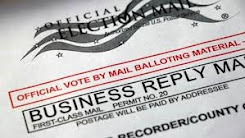
ballot effort. Podhorzer’s group focused attention on helping states prepare for that, something many had minimal experience with. Additionally, they worked at (1) helping the public understand counting the votes might take longer than usual, (2) fighting disinformation on social media by getting the platforms to enforce their rules, and (3) encouraging both left-leaning activists and business groups to buy-in and avoid inflaming the situation. Meantime, Democratic lawyers vigorously fought court battles against Trump’s false claims, before and after the election.  

Alliances

Ball writes extensively about the “strange bedfellows” the effort attracted. She notes that the 

AFL-CIO and the U.S. Chamber of Commerce (along with some religious groups) issued a joint statement on election day calling on the media, the candidates, and voters to “exercise patience with the process and trust in our system,” even if they didn’t agree on a preferred outcome.

Once Trump’s post-election fraud claims went into overdrive, members of the group encouraged support from former elected officials for election administrators. In Michigan, for example, three former governors, Republicans John Engler and Rick Snyder and Democrat Jennifer Granholmjoined in calling for an electoral college tally free of White House pressure.

End Game

The Time story makes clear Podhorzer’s informal group anticipated the January 6 effort Trump and his supporters made to interfere with the congressional tally of electoral college votes. The left-leaning activists who were part of the alliance made things easier by standing down in the face of the insurrection. They didn’t confront Trump’s mob with a counter protest, which only would have made things worse, in part by letting the right wing media offer a false equivalency narrative.

In the end, the informal group Podhorzer spearheaded narrowly pulled out a victory. Ball’s story reported that they (and the country) “won by the skin of [our] teeth.”  That the  United States

needed the kind of effort reported by Time both depresses and encourages. It depresses, of course, that we had such a close call. It encourages because Americans of all political persuasions stepped up and preserved our democracy. The Time story is worth reading.